


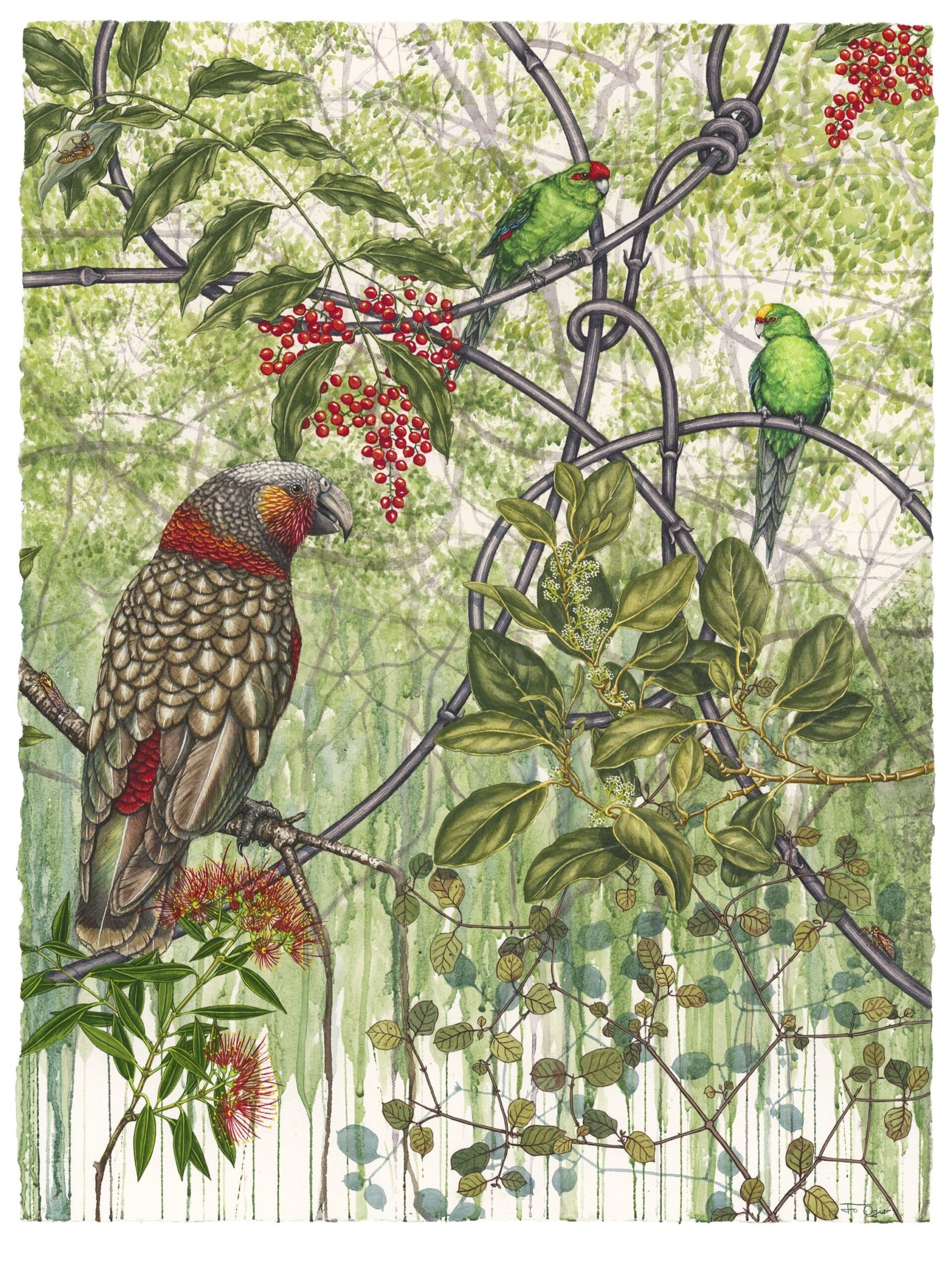
This artwork is from a series of 26 works created for the exhibition He Wai Apakura – Te Ara Pounamu/ The River’s Lament – A Pathway of Treasures.
Fauna and Flora
- Kākā/ Kaka/ Nestor meridionalis
- Kākāriki/ Red-crowned parakeet/ Cyanoramphus novaezelandiae
- Kākāriki/ Yellow-crowned parakeet/ Cyanoramphus auriceps
- Tarakihi, kikihi, kihikihi/ Pink murihiku cicada/ nymph – matua kihikihi/ Kikihia rosea
- Kareao, pirita/ Supplejack/ Ripogonum scandens
- Kāpuka, pāpāuma/ Broadleaf/ Griselinia litoralis
- Coprosma rotundifolia
- Rātā/ Southern rata/ Metrosideros umbellate
The exhibition has been a collaborative project that collectively links the natural habitats of our indigenous flora and fauna with archive-based information sourced through oral histories gathered from key kaumātua from the Hokonui Rῡnanga, the Eastern Southland Gallery and other experts such as Brian Rance, Eric Edwards, Daniel Jack and others. The featured artworks not only explore the many species of flora and fauna that once defined Māruawai and the wider Mataura River Valley, but also incorporate their early names and associated locations.
With the support of the Hokonui Rūnanga it also highlights the importance of this section of the Mataura River for its numerous mahinga kai sites and its role as a pathway for those who have gone before. These sites include: Kowhaka-ruru/ Pyramid Hill down to Wharekorokio, Hoka-nui/ East Peak and the Hokonui Hills, Ōnuku/ East Gore Terrace, Kahuika/ Junction of the Waikākahi/ Waikaka and Mataura rivers, Te Au nui Pihapiha Kanakana/ Mataura Falls, Mouth of the Waimumu Stream and Tuturau. Due to the lack of remaining native vegetation and the loss of many species, I have chosen to illustrate what would have been present in pre-European times. I have selected only that which could be reintroduced as to include all the extinct species would be another body of work and perhaps… I like the concept of the possible not the impossible!
The works do lament the loss of these taonga – these natural treasures, and the poor health of the awa in places. At the same time, they also aim to foster a greater understanding, awareness, appreciation and connection to the diverse flora and fauna and their ecosystems from this area. I hope with all my heart it will encourage and inspire us to take better care of the environment, by engaging in and working towards the restoration of this precious awa and its pathway of natural treasures, both in and around it for future generations.
A Limited Edition of 50 Fine Art Giclee Prints of this artwork are available through the Eastern Southland Gallery, Gore for $300 each.